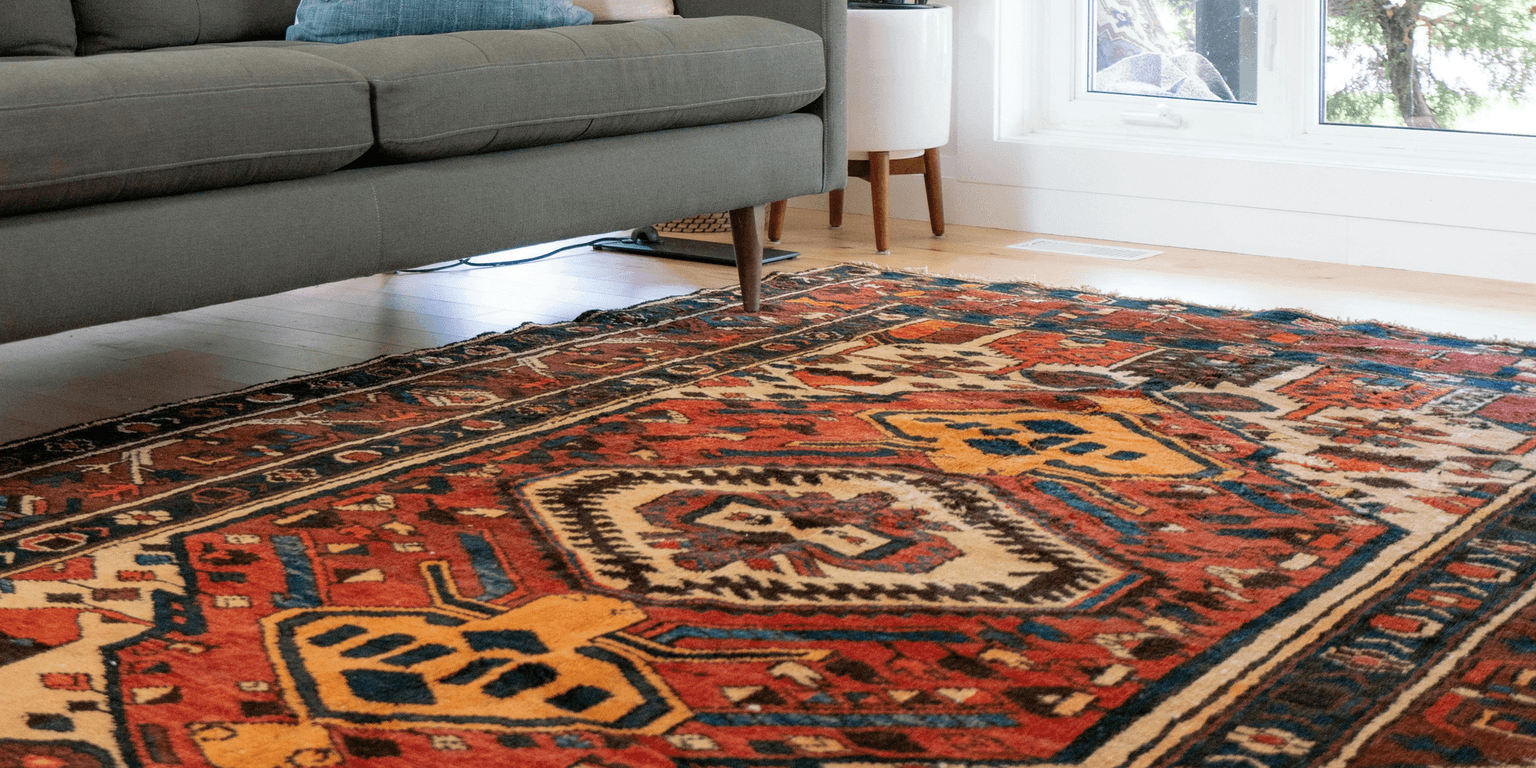
Fold back one corner of your rug and look at the base of the pile. If the knots or backing look darker than the top, or a little grit trickles out when you give that corner a shake, the rug is carrying far more dirt than it shows. Patterned rugs are very good at hiding it.
We clean area rugs right where they lie in your house. Nobody rolls yours up and hauls it off to a plant, so there's no claim ticket and no week of bare floor while you wait. Your rug is usually back under the coffee table by dinner.
What happens before any cleaning
The first job is working out what the rug is made of. Wool, silk, cotton, jute, nylon, olefin and the other synthetics all behave differently when damp, and a polypropylene rug from a big-box store can take treatment that would ruin a wool one. A label helps. So does knowing where it came from.
Next comes a dye test. Your technician presses a damp white cloth on a hidden spot to see whether any color lifts. Most rugs pass without trouble. A rug that bleeds gets a cooler, gentler approach, and a rug that looks too risky gets left alone, with an explanation.
Then the dry soil comes out, which is the step a household vacuum can't really manage. Red-clay dust and fine sand from the yard settle at the bottom of the fibers, below where a beater bar reaches, and each footstep grinds that grit against the yarn. Pulling it out before anything gets wet keeps it from turning into mud in the pile.
After that it's a pre-treatment on spots and walking paths, a carbonated clean that lifts the soil with very little moisture, and grooming so the pile dries lying the right way. If the rug sits on hardwood, the tech works the edges carefully so nothing soaks through to the boards.
Drying, and the stains that stay
Thin flatweaves and cotton rugs are sometimes dry before your technician finishes writing up the ticket. A thick wool rug or a shag may take the afternoon. A ceiling fan helps, and so does leaving the AC on during a muggy stretch. Keep furniture off until it's completely dry, or set the legs on the little plastic tabs the tech can leave with you.
Some marks are past saving, and we'll say so up front. Old pet urine can permanently change a dye. So can bleach, some acne creams, and plant food that dripped from a pot. Cleaning takes out the soil and the smell in those cases, but the color shift stays.
When a rug is due
Every 6 to 12 months suits most rugs. The one at the back door and the one under the kitchen table sit at the short end of that range, along with anything the dog has claimed as a bed. If a rug smells like a pet once the room warms up, urine has reached the backing, and the enzyme work for pet urine can go on during the same visit. Hand-knotted pieces have their own page on Oriental rug cleaning.
There is a $25 rug discount right now; grab the coupon before you book. Tell us the size and what you know about the rug through the contact form, or call 803-393-7625 and talk it through.