
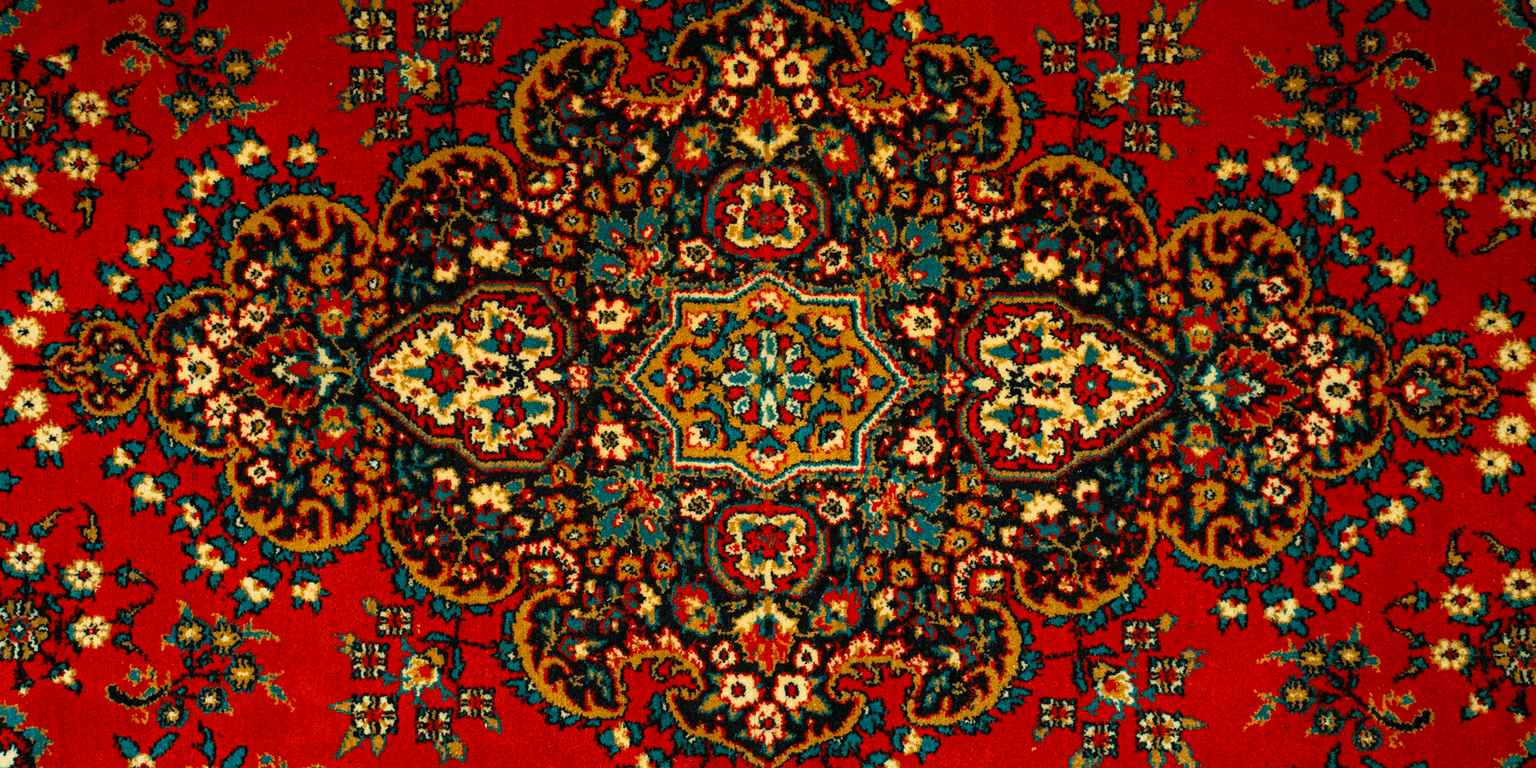
A well-made hand-knotted rug can outlast the house it lives in. What shortens its life, more often than foot traffic, is one bad cleaning: too much hot water, a strong detergent, a dye that ran into the field and never came back out.
So we go slowly with these. A lot of the older homes around Blythewood, the ones sitting on big wooded lots, have a Persian or Turkish rug that came down from a grandparent, and the people who own them are rightly nervous about letting anybody near it. That nervousness is healthy. Here is what we actually do, start to finish, in your living room. Your rug never leaves the house.
The inspection and the cleaning
Your technician starts on the back of the rug. The back tells you more than the face does: how tightly it's knotted, if the foundation is cotton or wool, where earlier repairs were made, and whether moths have been at it. Fringe gets a look too, since loose or brittle fringe needs a lighter hand.
Then every color gets tested. Reds and deep blues are the usual troublemakers on older rugs, especially ones dyed with natural pigments. A damp white cloth pressed against each shade shows right away if anything wants to move. If a color bleeds, the plan changes. If it bleeds badly, we stop, tell you so, and leave the rug alone that day. Losing a job is fine with us. Ruining your rug isn't.
Dry soil removal comes next, and on a hand-knotted rug it may be the most useful thing we do. A dense pile can hold pounds of fine grit down at the knots, and that grit acts like sandpaper every time someone walks across. Getting it out dry, before any moisture is involved, means it can't turn to mud inside the weave.
After that the tech pre-treats any spots with a gentle, soap-free solution and cleans the rug using carbonated bubbles and very little water, so the foundation never gets soaked. That matters most with a cotton foundation, which can shrink or brown if it stays wet too long. The nap is groomed by hand in the direction it was woven, and the rug dries flat on your floor. Most are dry within a few hours, though a thick, older piece on a humid day can take longer.
Before leaving, your technician goes over the rug with you in good light. You'll see the colors, feel the pile, and point out anything that still bothers you.
Things worth knowing first
We clean rugs. We don't repair them. Moth damage, a split foundation, unraveling sides and fringe that's come loose all need a rug restorer, and it's better to get that work done before a cleaning, since a weak spot can get worse once it's handled. If your rug needs a restorer, you'll hear it during the inspection, before anything gets wet.
Silk takes extra care, and an old repair done with the wrong dye may not match once the dirt around it is gone. Neither one rules out a cleaning. They're just things you'll want to know going in.
Plan on a professional cleaning every 6 to 12 months, sooner for a rug in a busy hallway or one the dog likes. Our $25 rug coupon is good on Oriental rugs too (see the coupons page). If you want to book, choose a time online and mention the rug's size and rough age in the notes. For everyday area rugs, the area rug cleaning page covers the basics.