
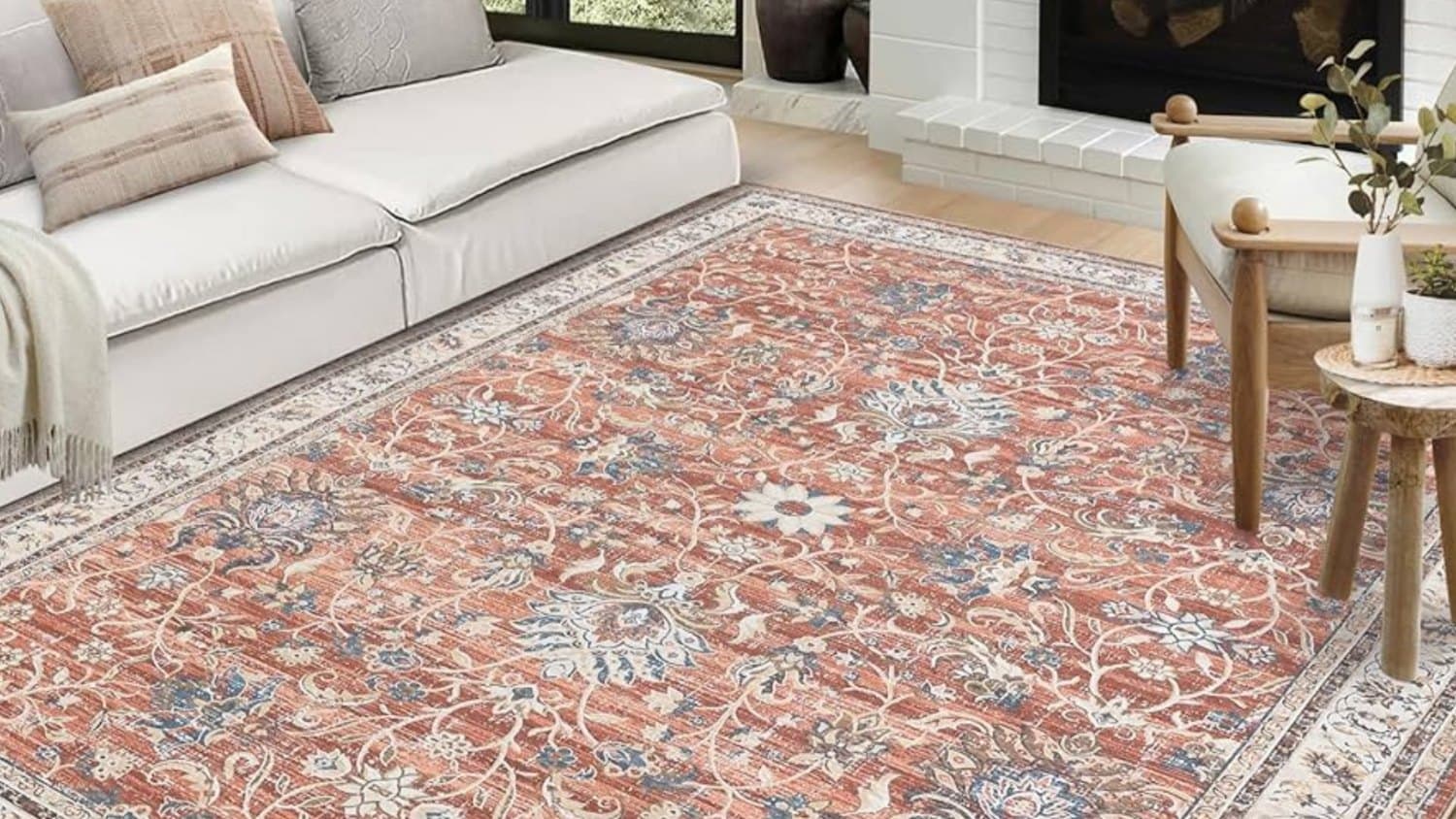
Slide the coffee table aside to vacuum and the rug underneath is still the color you bought it in. Then look at the strip between the back door and the couch, a shade darker, with a fainter branch peeling off toward the kitchen. Nobody spilled anything there. It's just the path everyone in the house walks forty times a day.
Traffic changes a rug in three ways at once. Shoes and paws carry in grit, and in a town with sandy yards that grit is mostly fine sand. Every step then grinds that sand against the base of the fibers like sandpaper. And the weight of all those steps crushes the pile flat, so it reflects light differently than the pile around it. Add the oil from bare feet and dog paws, and the lane starts holding dust faster than the rest of the rug.
How that shows up depends on what the rug is made of.
What traffic does to each kind of rug
Wool
Wool hides dirt well, which is good news and bad news. A wool rug can carry a surprising load of soil before it looks dirty, and all that time the grit is cutting fibers at the base. Traffic lanes on wool usually look a little lighter or fuzzy, almost felted, more than dark. Caught early, a cleaning that pulls the grit out stops the wear. Wool fibers that have already been sanded down won't grow back.
Synthetic
Nylon, polyester and polypropylene rugs are built for busy houses and shrug off most spills. On these, traffic shows up as lost sheen. Sand leaves tiny scratches on each fiber, and the lane goes flat and grayish while the edges still have their shine. Polypropylene in particular grabs onto oily soil, so the lane in a kitchen or at the back door darkens quickly. Cleaning brings a lot of that back, since much of the gray is oil and soil sitting on the fiber.
Oriental and heirloom rugs
Hand-knotted rugs are usually wool (occasionally silk) on a cotton foundation, and they're tougher than they look. Wear shows up in the main field where people walk and on the fringe, which darkens from shoe contact and frays where vacuums catch it. Dyes on older or handmade pieces can be unstable, so the cleaning has to start with a dye test and keep water well away from the foundation. Our oriental rug cleaning is set up around exactly those concerns, and it's done right there in your house.
Flatweaves
Kilims, dhurries and other flatweaves have no tall pile to crush, so the shaded lane never forms. These rugs go dark instead, from oil and soil worked into the weave, and their edges curl at the spots where people pivot. These need rotating more than any other kind of rug.
Where the wear starts
Every house has the same hot spots. The rug or runner nearest the door to the garage or yard takes the first wave of everything outside, including the yellow layer of pine pollen every spring. Hallway runners see one narrow path, and every person walks it. Living room rugs develop a route between the door and the seating. Dining rugs get crumbs plus chairs scraping back and forth over them, which grinds debris in at the edges.
Dogs make their own lanes. They run the same line to the back door every time, and they pick a favorite corner to lie in, which collects body oil in a perfect dog-shaped patch.
Two cheap habits that slow it down
Put two mats at every outside door: a coarse one outside to scrape off sand, and an absorbent one just inside to catch moisture. Shake or wash them weekly. That one change keeps more abrasive grit off your rugs than anything else on this page.
Then turn each rug 180 degrees every three to six months. If you have two matching runners, swap them. Tying it to the change of seasons makes it easy to remember, and it spreads the wear so one end doesn't age years ahead of the other.
The rugs people assume are ruined
We see a lot of rugs that the owner was ready to roll up and put by the curb. Very often they come back. A lane that looks like permanent damage frequently turns out to be oil and packed-in soil, and once that's out the color and texture match the rest of the rug again. Even we get surprised by how much a fabric everyone had written off can be saved.
Pet urine is the most common reason these rugs get written off, and it's one of the most common rug jobs we do. We see it in cheap synthetic area rugs and in handmade orientals alike. Urine left in a rug for months needs an enzyme treatment that reaches through the whole rug, plus a cleaning that doesn't flood the backing. Because we do all of that in your home, nobody has to haul a heavy rug anywhere.
The honest part: cleaning can't rebuild fiber. If the lane is caused by soil and oil, it will lift. If the wool has been worn down to the knots, or the pile on a synthetic is permanently crushed, cleaning makes it look better but it won't make the lane disappear. Your technician will look at the rug with you and tell you which situation you're in before the work starts.
If you have a rug with a lane you've been staring at, send us a note through the contact form with what kind of rug it is, and we'll tell you what to expect from an area rug cleaning.