Most streaky hardwood floors are dirty with cleaner. The haze you see in the afternoon light is usually leftover product, layered on mop by mop until it catches the sun like a film on a windshield. Mopping harder or buying a stronger bottle adds another layer.
The fix depends on where the streak came from, and the floor usually tells you if you look closely. Here are the usual causes, roughly in the order we run into them.
Too much product
This is the big one. Hardwood cleaners are meant to be diluted, often a capful or less per gallon, and the spray-bottle kind is meant to be misted lightly over a few square feet at a time. Most people use two or three times that, figuring more soap means more clean. Whatever the mop doesn't pick back up dries on the finish.
How to tell: the streaks follow your mop strokes, and the floor feels faintly tacky in socks. A clean microfiber cloth wiped across a hazy spot comes away a little greasy.
The fix is to strip the film back off. Mist a small section with plain water, wipe it right away with a clean microfiber pad, then buff it with a dry pad. Work the room in sections about four feet square. It's tedious, and you might need two passes, but the floor gets its even look back. After that, use half the cleaner you think you need.
Dirty mop water
If you mop a whole downstairs out of one bucket, by the last room you're spreading gray water. Dissolved soil dries into dull swipes, especially along the edges of each stroke.
You'll notice the first room looks fine and the last one looks worse, or the streaks run grayish and cluster in the kitchen and at the doors.
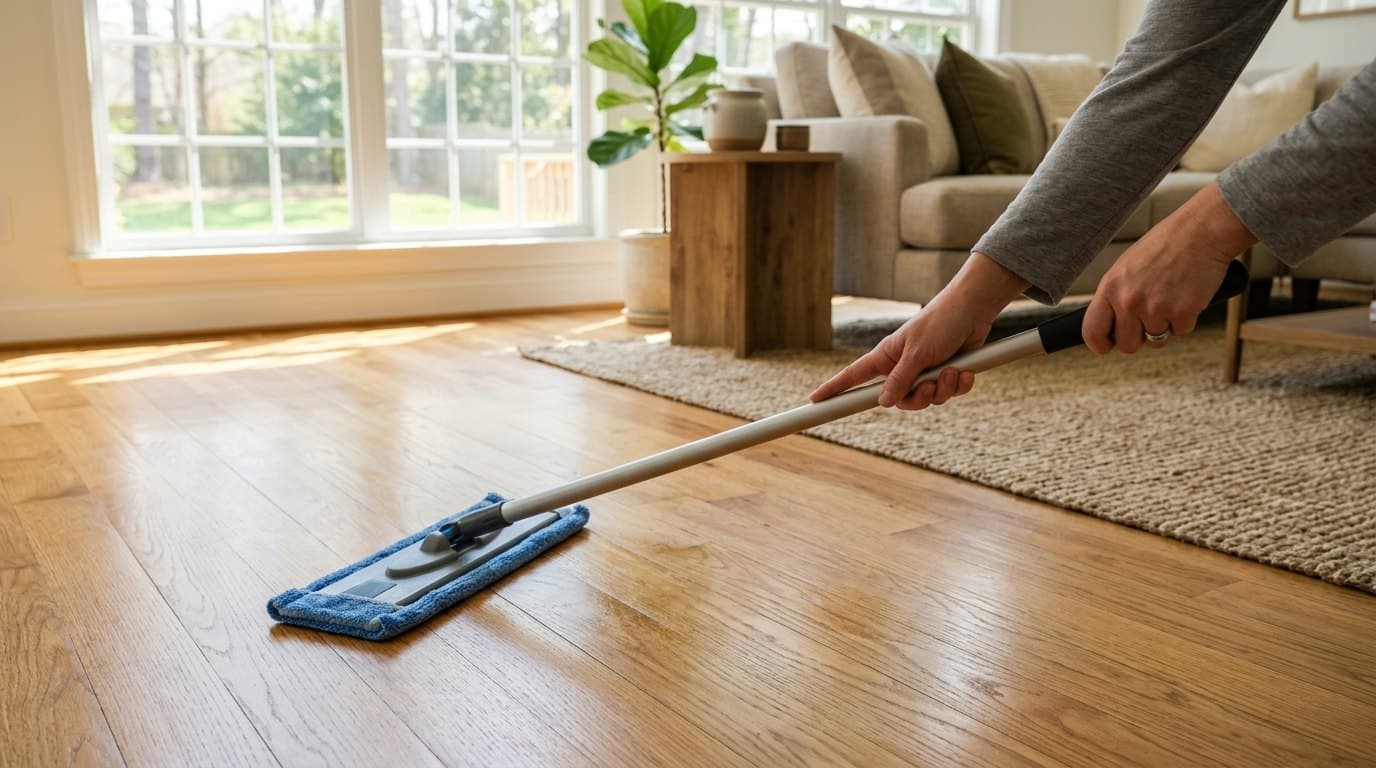
A better setup solves it. Sweep or dry-mop first so grit and sand never make it into the water. Then use a flat microfiber mop with several pads and swap to a fresh one the moment it looks dirty, or use two buckets, one for cleaner and one for rinsing the pad. Retire the string mop. It holds too much water for wood anyway.
The wrong cleaner
Oil soaps are the most common culprit. They were made for a different era of wood finishes, and on a modern polyurethane or factory finish they leave an oily film that smears and grabs dust. "Shine" products and floor restorers are similar: they put down a thin coat of their own that looks great for a week and then goes dull and streaky.
Vinegar gets recommended everywhere. On a finished floor, regular vinegar mopping gradually dulls the finish, and it won't cut through film that's already there, so it often makes haze more visible. We don't recommend it on wood at all. A pH-neutral cleaner made for finished hardwood, used lightly, is the boring answer, and it's the right one.
Steam mops belong in this section too. They push hot moisture into the seams between boards, which is the last place you want it.
Old wax
Some older homes have floors that were waxed at some point. Water-based cleaners can turn wax cloudy or white, and wax smears whenever you try to clean it.
To check, go to an out-of-the-way corner and scrape gently with a fingernail or the edge of a coin. If a waxy smudge comes up, the floor has wax on it. A drop of water that turns white after a few minutes is another sign.
A waxed floor needs its own approach, and that work is outside what we do. If you're not sure what's on yours, tell us when you call and we'll be honest about whether our cleaning fits.
Humidity
Our summers are hard on wood floors. When the house air is muggy, cleaning solution dries slowly and unevenly, leaving patchy marks where one section dried ahead of the next. Mopping with windows open on a damp August day is a recipe for haze.
Mop with the AC running, use less water than seems reasonable, and turn on the ceiling fans when you finish. If you can see a wet sheen on the boards for more than a minute or so after the mop passes, it's too wet.
What a professional hardwood clean does
Sometimes the buildup is past what a mop and patience can handle: years of oil soap, a layer of restorer, and the grime trapped in it. When we clean wood floors, the solution is pH-neutral and goes down with very little water, so it's safe on finished, engineered and prefinished floors. It lifts the film and the ground-in soil off the finish without flooding the boards, and the floor is ready to walk on quickly. The hardwood floor cleaning page has the details.
Just as important is what it doesn't involve. There's no sanding or refinishing, and we don't put a polish or any other coating down afterward. You get your original finish back, clean.
That's also the limit. If the dull areas are worn finish (gray traffic paths where the finish is gone and the wood itself looks dry), cleaning won't restore them. That floor needs a refinisher. If you'd like more background on caring for wood floors, our network's hardwood floor care site goes further into it.
Hardwood cleaning is $50 off right now on the coupons page. If you've been fighting the same streaks for months, give us a call at 803-393-7625 and describe what you're seeing. We can usually tell from the description which of these five causes you're dealing with.