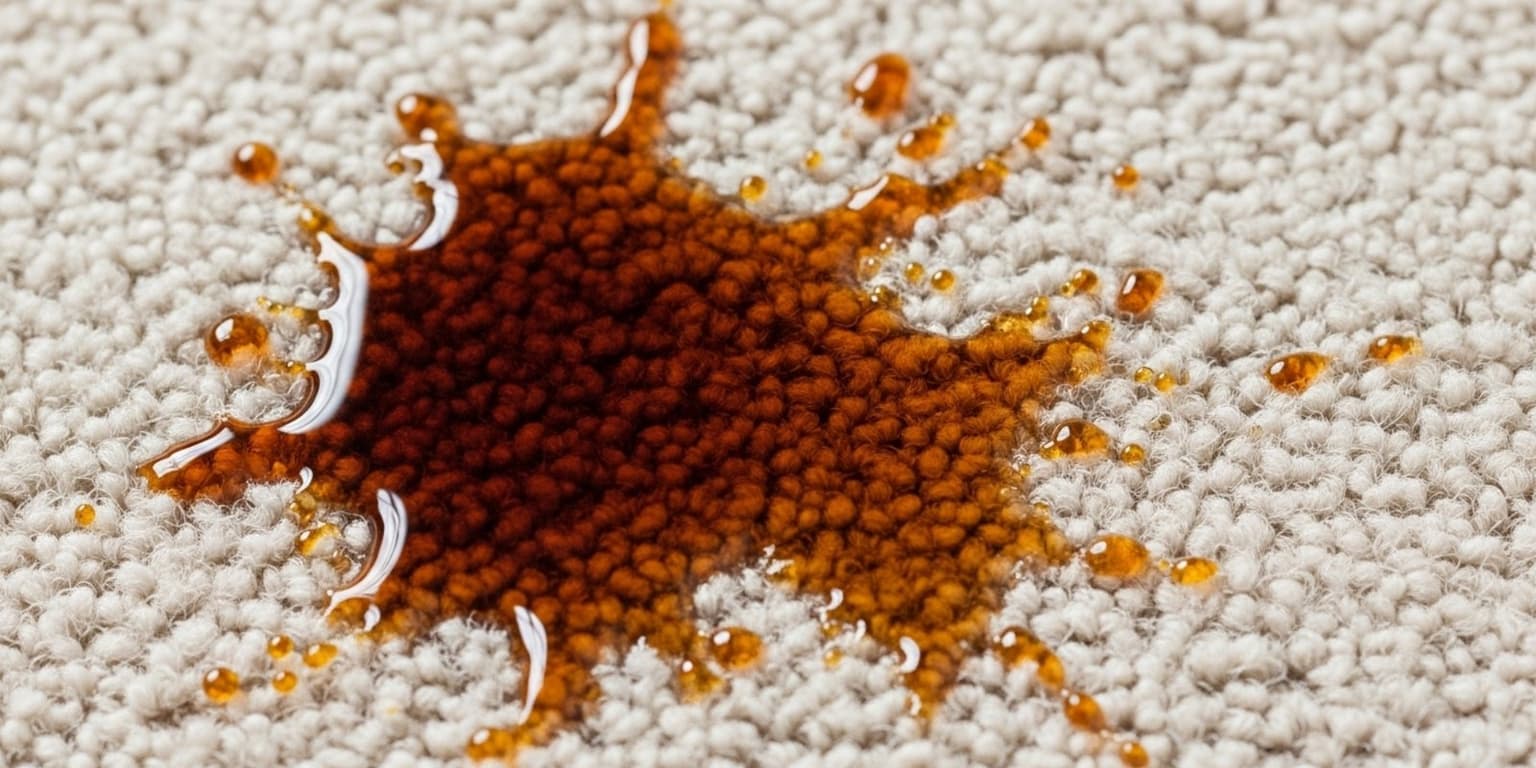
Two minutes of blotting does more for a coffee spill than an hour of scrubbing the next morning. Coffee is mostly water carrying tannins, the same brown plant compounds that stain a teacup, and those tannins bond to fiber faster when the coffee is hot and the rug is warm. The sooner you pull the liquid out, the less of that dye stays behind.
The fix, in order
Start with a stack of white cloths or plain paper towels. White matters because you can see how much coffee is coming up, and nothing printed on the towel can transfer into the rug.
- Lift off anything solid first. Whipped topping, foam or sugar crystals come up with a spoon.
- Blot hard without rubbing. Press a dry cloth down, lift, switch to a dry section, repeat. Work from the outside of the spot toward the center so you aren't pushing the ring wider. Keep going until the cloth comes up barely tinted.
- Test your cleaning mix on a hidden corner of the rug, ideally one that sits under a couch or table.
- Treat with something mild. A quarter teaspoon of clear dish soap in two cups of cool water works for most rugs. Dampen a cloth with it and blot; don't pour it on.
- Rinse by blotting with a second cloth dampened in plain cool water. Skip this and the soap stays in the fiber.
- Blot dry with a towel, then get air moving. A fan pointed at the spot, or the corner of the rug propped up on a paperback so air reaches underneath, keeps a ring from forming.
- Check it the next day in daylight. A faint shadow can take a second round. If it's the same after two tries, stop.
When there was cream or sugar in it
Black coffee leaves color. A latte leaves color plus milk fat, proteins and sugar, and those are a separate problem. The brown can fade completely while the sugar stays behind as a sticky spot that collects dirt off every passing sock, so a week later the stain seems to have returned. Milk can also start to smell sour, especially in a humid room.
For these, do the dish-soap step and then rinse twice as thoroughly as you think you need to. Run your fingers over the dry spot afterward. If it feels tacky or stiff compared to the rest of the rug, residue is still in there.
What makes it worse
Hot water helps set coffee, so keep everything cool. A stiff brush roughs up the pile and leaves a fuzzy patch that looks different from the rest of the rug forever, even after the stain is gone. Pouring water on to flush the spot sends coffee down into the backing and the pad, where it spreads out and wicks back up as a bigger ring.
Strong carpet spot sprays and oxygen bleach products are where most permanent damage on area rugs comes from. They can strip dye from wool and leave a pale patch that's harder to live with than the coffee was. Vinegar is fine on many synthetic rugs, but we wouldn't use it on wool or anything handmade without a test.
Wool, synthetic and natural fibers
Synthetic rugs (nylon, polyester, polypropylene) are the forgiving ones. They resist absorbing coffee, tolerate a little moisture, and usually come clean with the steps above. Most of the machine-made rugs in newer houses fall into this group.
Wool soaks coffee up quickly and holds onto both the color and the smell if the spill goes deep. It also doesn't like scrubbing or alkaline cleaners. Gentle blotting and low moisture are the safe route, and on an oriental or handmade wool rug we'd call a professional if the first blot doesn't take most of the color out.
Jute, sisal and seagrass are the hard cases. Water itself can turn these fibers brown, which leaves you with a water stain on top of the coffee stain. Blot dry and use as little moisture as you possibly can. We'll be straight about this one: coffee on jute often fades to a lighter tan mark and stays there, even after a professional cleaning.
Cotton flatweaves absorb fast and tend to ring when one spot dries ahead of the area around it. Silk or silk blends shouldn't get any DIY treatment past dry blotting.
When to call us instead
Some coffee stains are bigger than a spot. If the rug has also been in the path of the back door for a few years, cleaning only the coffee leaves a bright patch in a dull rug, and the whole thing needs to be done. Call if the stain has dried and set for more than a few days, if it's on wool or an heirloom piece, if the rug smells sour, or if your DIY attempt left a ring.
Our area rug cleaning happens on the floor of your home, with a dye check first and enough moisture control that the backing doesn't get soaked. There's $25 off oriental and area rugs on the coupons page.
And keep a lid on the travel mug. It's the cheapest rug protection there is.