
Menu
Same-Day Service Available!
Pets are part of the family, and when one of them gets sick, the priority is always helping them feel better. Carpet cleaning usually comes second. A family may spend several days caring for a dog, cleaning up accidents, washing bedding, opening windows, and trying to keep the rest of the house running normally. By the time the pet starts feeling better, the room where the accidents happened may have developed stains and an odor that regular household cleanup has not fully removed.
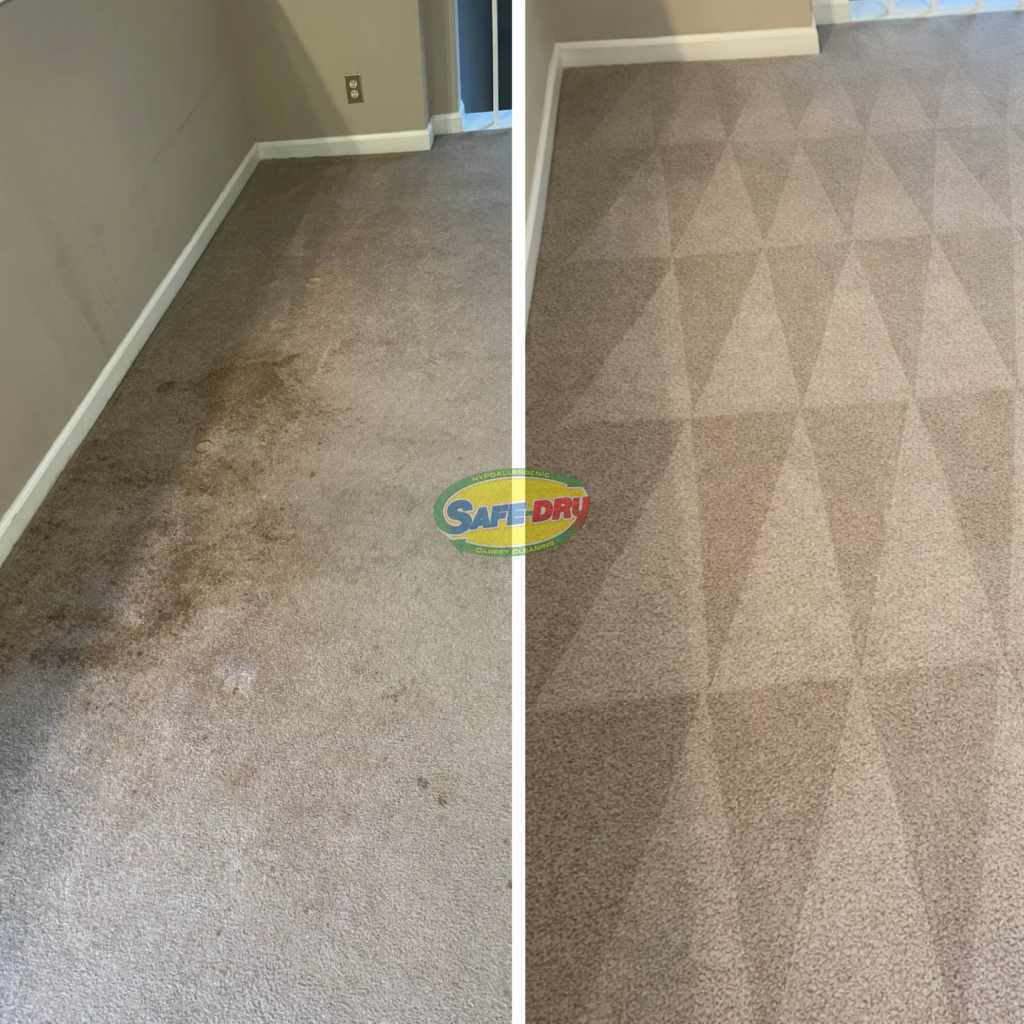
We recently helped a homeowner in Blythewood, SC, 29016 who experienced exactly this situation. Their dog had been sick for several days, and the bedroom carpet became one of the most difficult parts of the cleanup. What began as a few accidents had turned into a lingering odor that was no longer confined to the bedroom. The homeowner could smell it throughout the house, and the carpet had reached the point where they were understandably worried that it might need to be replaced.
After our carpet cleaning service, the homeowner shared this experience:
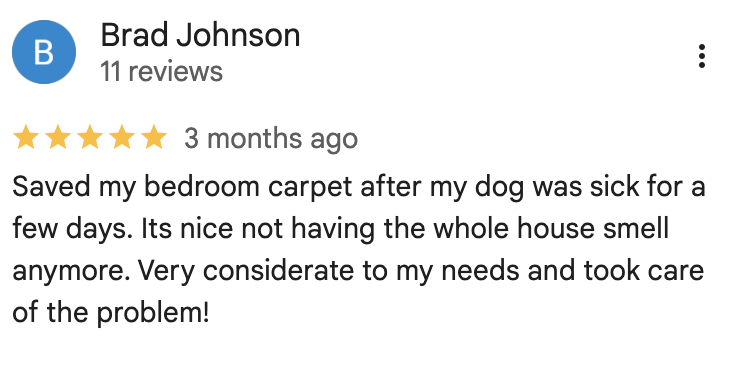
We appreciated this review because it describes more than a cleaner-looking carpet. It reflects the relief that comes when a room finally feels usable again. The customer did not have to keep wondering whether the odor would return every time the bedroom door opened. They also did not have to immediately move toward carpet replacement.
For our Safe-Dry® team, this is the kind of result that makes professional carpet cleaning meaningful. We have spent 30 years helping families care for their homes, and pet-related situations are a good reminder that carpet cleaning is often about comfort as much as appearance. A carpet may look like one part of a room, but when it holds odor from repeated pet accidents, it can affect how the whole house feels.
The challenge in this Blythewood home was not simply to make one visible spot disappear. We needed to understand what had happened over several days, how much of the room had been affected, what the homeowner had already tried, and whether the carpet could be cleaned without soaking it with unnecessary moisture.
From there, we could build a cleaning approach around the actual problem.
One pet accident is usually easier to manage than repeated accidents over several days. When a dog is sick, however, accidents may happen before the family can predict them. The same section of carpet may be affected more than once. New areas may become involved. The homeowner may clean one spot, only to discover another a few hours later.
During those days, caring for the pet comes first. Families may be managing medications, feeding schedules, veterinary appointments, work, children, and sleep while trying to clean the carpet in between everything else. Even a careful homeowner can reach a point where basic cleanup is no longer enough.
Carpet is also more complicated than the surface we see. The visible fibers are only one layer. Depending on how much liquid reaches the carpet and how quickly it is removed, pet-related material can move below the top of the fibers. This is one reason an area may look better after cleaning but still smell unpleasant later.
A towel can absorb a large amount of fresh moisture. A household carpet cleaner can also help with certain surface issues. However, repeated accidents can create a broader problem than one quick cleaning session can reach.
In this Blythewood bedroom, the smell had become the clearest sign that the problem was not limited to what could be seen. The homeowner had reached a point where the room itself felt uncomfortable, and the odor was moving beyond the bedroom into other areas of the home.
Professional carpet cleaning gave us an opportunity to slow the situation down and look at it more carefully. Instead of reacting to one spot at a time, we could consider the room as a whole.
Bedrooms should feel clean, calm, and comfortable. A lingering odor changes that quickly.
Even after the bed is made and the room is picked up, an unpleasant carpet smell can dominate the space. Homeowners may try opening windows, running fans, spraying fragrance, or using household deodorizing products. These efforts can make the room smell different temporarily, but they do not always remove what is causing the odor.
When pet messes are involved, the difference between covering an odor and addressing the source matters.
A fragrance can mix with the existing smell and create an even stronger scent. Once the fragrance fades, the original odor may become noticeable again. In some cases, the homeowner begins repeating the process because the carpet seems fresh for a short time and then returns to the same problem.
The customer in this story specifically mentioned being relieved that the whole house no longer smelled. This is important because odor does not always stay inside the room where the accident happened.
Interior air moves from room to room. Heating and cooling systems circulate air. Bedroom doors open and close throughout the day. People walk across affected carpet and then continue through the rest of the house.
A problem that began in one bedroom can gradually make the entire home feel less fresh.
When we approached this job, our goal was not simply to replace the pet odor with a cleaning-product smell. We wanted to clean the affected carpet in a way that helped restore the room itself.
Before we begin professional carpet cleaning, we need to know what the carpet has been through. This becomes especially important when pet stains and odors are involved.
We asked the homeowner what had happened during the dog's illness, where the accidents had occurred, and how long the problem had been present. We also needed to know whether household cleaning products had already been used on the carpet.
This information matters because previous cleaning attempts can change the condition of the fibers. Some products leave behind soap or fragrance. Others may introduce a large amount of moisture. A homeowner may have treated the same area several times because the odor kept returning.
None of this is unusual.
People naturally try to fix a pet accident before calling for help. Our role is not to criticize those attempts. We simply need to know what has already been applied so we can make better decisions during professional cleaning.
We also listened to what the homeowner wanted most from the service.
In this case, the strongest concern was the odor and whether the bedroom carpet could be saved. Cosmetic improvement mattered, but the room needed to feel comfortable again.
Understanding that priority allowed us to focus the cleaning process on the problem that was affecting the family's daily life the most.
One of the most confusing parts of pet accident cleanup is how quickly the visible problem can disappear compared with the odor.
A homeowner may blot the area thoroughly. The carpet may dry and look almost normal. Hours later, the smell is still there.
This can happen because what is visible on the fibers does not always represent everything that reached the carpet.
Liquid may travel lower than the surface. Repeated accidents can affect a broader area. Cleaning products may also leave their own residue behind.
Odor can become especially noticeable once an area dries.
While the carpet is damp, the room may smell strongly of the cleaner being used. Once that fragrance fades, the original pet odor can become obvious again.
This is why professional pet-related carpet cleaning cannot focus only on appearance.
The affected carpet needs to be evaluated as a cleaning and odor problem together.
In our Blythewood customer's bedroom, the improvement in how the house smelled afterward became one of the most meaningful signs that the cleaning had addressed more than surface dirt.
Pet accidents can tempt people to use more and more water.
The thinking is understandable. If something unpleasant is in the carpet, rinsing it heavily may seem like the best way to wash it away.
Carpet has multiple layers, however, and excessive moisture can create its own problems. Water may move deeper into the carpet or spread an affected area farther. Drying can also take much longer.
Our low-moisture process is designed to provide a deeper clean without unnecessarily saturating the carpet.
Using controlled moisture is particularly helpful in bedrooms because families usually want to get back into the room as soon as possible. A carpet that remains wet for most of the day creates another inconvenience after an already stressful pet situation.
Safe-Dry® carpet cleaning is designed to dry in about one hour under typical conditions. Actual drying time depends on several factors, including airflow, humidity, carpet construction, and the amount of treatment an area needs.
For this homeowner, fast drying helped the bedroom return to normal much sooner.
Less moisture also allowed us to approach the pet problem more carefully. Instead of treating the entire room as though more water automatically meant more cleaning, we used the amount needed for the carpet's condition.
Many pet accidents lead to multiple household cleaning attempts.
One product may be used for the visible stain. Another is added for odor. A powder might be applied later. The homeowner may then use additional carpet shampoo because the first treatment did not completely solve the problem.
By the time professional carpet cleaners arrive, the fibers may contain layers of product residue along with the original pet-related contamination.
This can make the carpet harder to maintain.
Traditional soaps and detergents can leave sticky material behind when they are not fully removed. That residue can attract soil as people continue walking across the carpet.
A spot that looked clean immediately after treatment may begin looking darker again because dirt attaches to what remains in the fibers.
Our soap-free cleaning process is designed to avoid adding another heavy detergent layer to the carpet.
Residue-free results are especially important in a bedroom. People may walk barefoot across the carpet, pets may return to the room, and children may sit or play on the floor.
The carpet should feel refreshed once the cleaning is finished, not coated.
Pet owners naturally care about what is being used in their homes.
A dog that has already been sick does not need another source of household concern.
Families with children have similar questions. Bedroom carpet is a surface people come into direct contact with every day, which is why the cleaning process should fit the way the room is actually used.
Our cleaning approach is safe, hypoallergenic, and designed with families and pets in mind.
We want homeowners to feel comfortable bringing normal life back into the room after the carpet dries.
This family-first approach also affects how we communicate during the appointment. We explain what we are seeing, what we recommend, and what kind of result is realistic.
Pet-related carpet problems vary widely.
One small accident is different from several days of illness.
Fresh contamination is different from an old stain that has been treated repeatedly.
Professional care means understanding these differences rather than treating every pet problem the same way.
Carpet replacement can feel like the only option when odor becomes severe.
A homeowner may begin imagining everything involved in pulling out the old carpet, moving furniture, selecting new flooring, scheduling installation, and dealing with the cost.
Replacement is sometimes necessary. Carpet can become physically damaged or deeply contaminated beyond what professional cleaning can reasonably correct.
However, replacement should not automatically be the first step.
When carpet remains structurally sound, professional cleaning is often worth considering.
Our Blythewood customer was able to keep the bedroom carpet after the cleaning process.
This outcome avoided the disruption of an unnecessary flooring replacement and allowed the room to return to normal much faster.
The homeowner's phrase about the carpet being “saved” captures the value of the service more clearly than any technical explanation could.
A problem that had begun to feel permanent became manageable.
Professional carpet cleaning is often judged visually.
Homeowners expect dirty areas to look brighter and spots to improve.
In this case, the change in the air mattered just as much.
The homeowner specifically mentioned that the entire house no longer smelled.
This is the kind of improvement families notice in everyday moments.
Opening the bedroom door feels different.
Walking down the hallway feels different.
Coming home after being away for a few hours feels different.
A lingering pet odor can become something people unconsciously brace themselves for each time they enter the home.
Once the smell is addressed, the whole space can feel lighter and cleaner.
For our team, this is a reminder that carpet cleaning is not only about how fibers look in a photograph. It is about helping restore comfort to the home.
Once the carpet has been professionally cleaned, the homeowner should not need a complicated maintenance routine.
Regular vacuuming remains the most useful habit.
Vacuuming removes pet hair, dust, dry soil, and everyday debris before it settles farther into the carpet.
Because our process is soap-free and residue-conscious, the carpet is not left with a sticky layer that encourages rapid resoiling.
This makes normal household maintenance easier.
The family does not need to continue applying pet cleaners to an area that has already been treated successfully.
In fact, adding unnecessary products afterward can create new residue and make the carpet harder to maintain.
Once the problem has been addressed and the carpet is dry, simple care is usually best.
Pet accidents are easier to handle when homeowners act quickly, but speed does not mean using every cleaner available.
The most useful first step is often absorption.
Remove as much of the fresh material as possible before adding anything else.
A clean white towel can be used to blot liquid from the carpet. Press the towel into the affected area, lift it, move to a clean section, and repeat.
Avoid scrubbing aggressively.
Friction can spread the mess into a larger section of carpet and may distort the fibers.
Another helpful lesson is to watch how the carpet behaves after drying.
If the visible spot improves but the odor returns, the problem may extend below the surface.
Repeatedly adding fragrance will not necessarily solve that.
Professional carpet cleaning becomes more useful when a pet has had several accidents, when the smell persists, or when household products have already been tried without success.
Homeowners do not need to call for professional service after every small accident.
A fresh, minor pet mess can often be managed with prompt basic cleanup.
The difference comes when the problem becomes larger than ordinary household care can reasonably handle.
Several days of pet illness are a good example.
Repeated contamination may involve multiple locations. Odor can move throughout the room. The homeowner may no longer know exactly where the strongest source is located.
At this stage, continuing to experiment with household products can create more work without producing better results.
Professional carpet cleaning offers a more structured approach.
We can inspect the carpet, evaluate affected areas, use appropriate cleaning methods, and control the amount of moisture introduced into the room.
When a pet accident includes solid material, remove it carefully before working on the remaining stain.
Use disposable gloves if appropriate and lift the material away from the carpet.
Avoid pressing downward or scraping aggressively, which can push the mess deeper into the fibers.
Once the solid material has been removed, focus on the moisture left behind.
Use a clean, absorbent white towel.
Place it over the affected area and press down gently.
Lift the towel, move to a clean section, and repeat.
Continue until very little moisture transfers.
A white towel is useful because it helps avoid color transfer and makes it easier to see what is being removed.
Scrubbing should be avoided because it can spread the accident and damage the texture of the carpet.
When the accident has a defined boundary, start near the outer edge and work inward.
This helps contain the affected area.
Aggressive wiping from the middle outward can spread the mess farther across the carpet.
Slow blotting may take longer, but it usually gives homeowners better control.
Pouring a large amount of water onto the carpet may seem like a good way to rinse away a pet mess.
Unfortunately, water can move the contamination deeper.
Excessive moisture can also spread the affected area and make the carpet much slower to dry.
Use moisture carefully.
When the problem appears to have reached deeper layers, professional carpet cleaning is a better option than repeated soaking.
Mixing cleaning chemicals can be unsafe and can damage the carpet.
It can also leave behind a significant amount of residue.
Use only products that are appropriate for the carpet and follow the label instructions.
If one treatment does not work, adding several more products is not always the answer.
Professional evaluation may save the carpet from additional unnecessary treatment.
A heavily scented spray can temporarily make the room smell fresher.
Once the fragrance fades, the original odor may return.
Focus on removing the source.
If the smell persists after the area dries, professional pet odor treatment may be needed.
Once a minor spot has been addressed, help the carpet dry with normal household airflow.
Run a fan when appropriate.
Keep the room ventilated.
Avoid leaving the carpet damp for an extended period.
Do not place heavy items over a wet area because moisture can become trapped.
The carpet may look and smell much better immediately after cleanup.
Check it again later.
A returning smell can indicate that the source was not fully removed.
A stain may also become more noticeable once the fibers are completely dry.
This delayed evaluation is useful because it tells you whether household care was enough.
A dropped drink and a pet accident are not always the same kind of cleaning problem.
Both can create visible spots, but pet accidents often introduce stronger odor concerns.
Repeated accidents can also make it difficult to determine how much of the carpet has been affected.
This is why pet stain removal and pet odor removal often require more targeted attention than routine carpet cleaning.
The rest of the bedroom may benefit from general cleaning, while the pet-related areas need additional treatment.
Professional cleaning allows us to approach the room in layers rather than assuming every square foot needs the same amount of attention.
Fresh accidents usually give homeowners more options.
Older stains may have been walked over, cleaned repeatedly, and exposed to months of normal household traffic.
Some substances can permanently alter carpet color.
Previous products may also change the appearance of the fibers.
This means professional carpet cleaning can often improve older stains without guaranteeing that every mark will disappear.
We believe realistic expectations are important.
The carpet can be clean even if a permanent discoloration remains.
Likewise, a stain can look better before an odor is completely resolved.
Appearance and odor need to be evaluated separately.
Professional carpet cleaning is not simply a matter of owning stronger equipment.
The technician needs to make decisions throughout the appointment.
How much moisture is appropriate?
Which areas need extra treatment?
Is the visible spot likely to be the full extent of the problem?
Has previous cleaning product buildup changed the condition of the carpet?
What outcome is realistic?
Professional training helps guide these decisions.
It also helps avoid unnecessary treatment.
Using more product or more water does not automatically produce a better result.
Sometimes restraint is part of good carpet care.
Our goal is to clean effectively while protecting the carpet and respecting the household.
A wet bedroom carpet can create a logistical challenge.
Pets may need to be kept out.
Children may forget and walk into the room.
Furniture may stay displaced.
The homeowner cannot fully return the space to normal until the carpet is dry.
Our low-moisture process helps reduce this disruption.
Carpets are designed to dry in about one hour in many typical conditions, although actual drying time varies.
For pet owners, this shorter drying window is especially helpful.
The family does not need to spend the entire day guarding a wet floor from curious paws.
The bedroom can return to its normal role much sooner.
Living with pets often means cleaning more frequently.
Hair collects on carpet and furniture.
Outdoor dirt comes in on paws.
Water bowls splash.
Occasional accidents happen.
Regular vacuuming is one of the best ways to keep carpet manageable.
Pet bedding should also be cleaned regularly.
Entry mats can reduce the amount of outdoor soil that reaches bedroom carpet.
When pets spend a lot of time on carpeted surfaces, these small habits can extend the fresh feeling after professional cleaning.
Professional service then becomes the deeper level of maintenance when normal household routines no longer produce the result the family wants.
Homeowners sometimes look at a badly affected area and assume replacement is unavoidable.
This can be an expensive conclusion to reach without having the carpet professionally evaluated.
A serviceable carpet may still respond well to cleaning.
Replacement becomes appropriate when physical damage, severe contamination, age, or overall condition makes cleaning unrealistic.
However, professional carpet cleaning can sometimes extend the life of carpet that looks or smells worse than it actually is.
Our Blythewood customer is a good example.
The homeowner was dealing with several days of pet illness and an odor that had spread beyond the bedroom.
After professional cleaning, the carpet stayed.
The room became comfortable again.
Replacement was avoided.
Carpet naturally collects material from daily life.
Dust settles into it.
Pet hair accumulates.
Outdoor soil is tracked inside.
Food crumbs find their way into fibers.
A pet illness adds another layer of concern.
Regular vacuuming removes much of the loose dry material.
Professional carpet cleaning helps address deeper buildup and problem areas that household cleaning may not fully reach.
We do not treat carpet cleaning as a medical service, but cleaner surfaces contribute to a cleaner household environment.
Families tend to feel more comfortable in rooms that look fresh and smell clean.
In this home, solving one bedroom carpet problem made a noticeable difference throughout the house.
Professional carpet cleaning can significantly improve many pet odors when the source is reachable and appropriate treatment is used. Results depend on how much contamination is present, how deeply it traveled, how long it has been there, and what cleaning products have already been applied.
Sometimes, yes. Carpet condition, contamination level, and how deeply the accidents penetrated all matter. A professional evaluation can help determine whether cleaning is a realistic option before replacement is considered.
Our process is designed with families and pets in mind. We use safe, hypoallergenic, soap-free cleaning and focus on low-moisture, residue-free results.
Our low-moisture process is designed for drying in about one hour in many typical conditions. Humidity, airflow, carpet construction, and the type of treatment required can affect the actual drying time.
Material may remain below the visible surface. Household fragrance can also temporarily cover the odor. Once the carpet dries and the fragrance fades, the underlying smell may become noticeable again.
Blotting is generally a better first response than aggressive scrubbing. Rubbing can spread the material and potentially damage carpet fibers.
Avoid flooding the carpet. Too much water can spread contamination deeper into the carpet or padding and increase drying time.
Avoid mixing household cleaning chemicals. Use products only according to their labels, and stop if repeated treatments are not solving the problem.
Not necessarily. Permanent discoloration or fiber damage may remain even after the carpet is clean. Professional cleaning focuses on achieving the best realistic improvement for the carpet's condition.
Explain where the pet accidents occurred, how long the problem has been present, and what household products have already been used. This information helps us evaluate the carpet more accurately.
Yes, many dog urine concerns can improve with professional treatment. Repeated or deep contamination can require additional attention depending on how far it has traveled.
Cat urine can create persistent odor and may require targeted treatment. Let us know where the accidents occurred and whether the same area has been affected repeatedly.
A soap-free process helps reduce sticky detergent residue that can attract dirt. This can make carpet easier to maintain after professional cleaning.
Once the carpet is dry and any technician instructions have been followed, normal use can typically resume.
When the carpet is still in serviceable condition, yes. Professional cleaning may be able to address stains and odors well enough to extend the life of the existing carpet.
The most meaningful part of this customer story is not simply that a bedroom was cleaned.
A stressful pet illness had created a problem that followed the homeowner through the rest of the house.
The bedroom carpet smelled.
The odor had spread.
Replacement was beginning to feel like a possibility.
After the cleaning, the homeowner could keep the carpet and enjoy a fresher home again.
This is why we approach carpet cleaning as more than surface appearance.
We listen to what the homeowner is experiencing.
We consider how pets, children, household routines, and previous cleaning attempts affect the situation.
Then we choose an approach that fits the problem rather than applying the same treatment to every home.
Life with pets is rarely perfectly clean.
Dogs get muddy.
Cats shed.
Water bowls spill.
Accidents happen.
Sometimes a pet becomes sick for several days and the carpet becomes part of the cleanup.
Families should not feel embarrassed about calling for help.
These situations are part of real homes.
Our role is to provide practical professional care when ordinary cleaning is no longer enough.
Safe-Dry Carpet Cleaning of Blythewood, SC, 29016 offers a low-moisture, soap-free approach designed around family life.
Our trained professionals take time to understand what happened, identify the areas that need attention, and explain what can realistically be improved.
We use safe, hypoallergenic cleaning solutions designed for homes with families and pets, while our residue-free approach helps keep carpet easier to maintain after the service.
A pet accident does not automatically mean a carpet is ruined.
Even several difficult days do not always mean replacement is the only option.
The homeowner behind this story was able to keep the bedroom carpet after their dog had been sick, and the improvement reached beyond the bedroom itself. The lingering odor that had made the whole house feel less fresh was no longer controlling the space.
If a pet stain, odor, or other carpet problem has become difficult to manage in your Blythewood home, professional carpet cleaning may be the next practical step.
Safe-Dry Carpet Cleaning of Blythewood, SC, 29016 is here to inspect the carpet, listen to your concerns, and recommend an approach based on what your home actually needs.
Our low-moisture carpet cleaning process is designed for fast drying in about one hour under typical conditions. Our soap-free method helps reduce sticky residue, while our family- and pet-friendly approach keeps everyday household life in mind.
You do not have to keep covering odors, repeatedly treating the same spot, or assuming the carpet needs to be replaced before it has been properly evaluated.
When you are ready for a cleaner, fresher bedroom or a deeper refresh throughout your home, reach out to Safe-Dry Carpet Cleaning of Blythewood, SC to schedule your carpet cleaning service.
A well-cleaned carpet can do more than improve the floor.
It can help the room feel comfortable again, help the house smell fresher, and let your family move forward from the mess instead of continuing to live around it.


